
Processes Win Wars — Or Maybe It’s Protocols
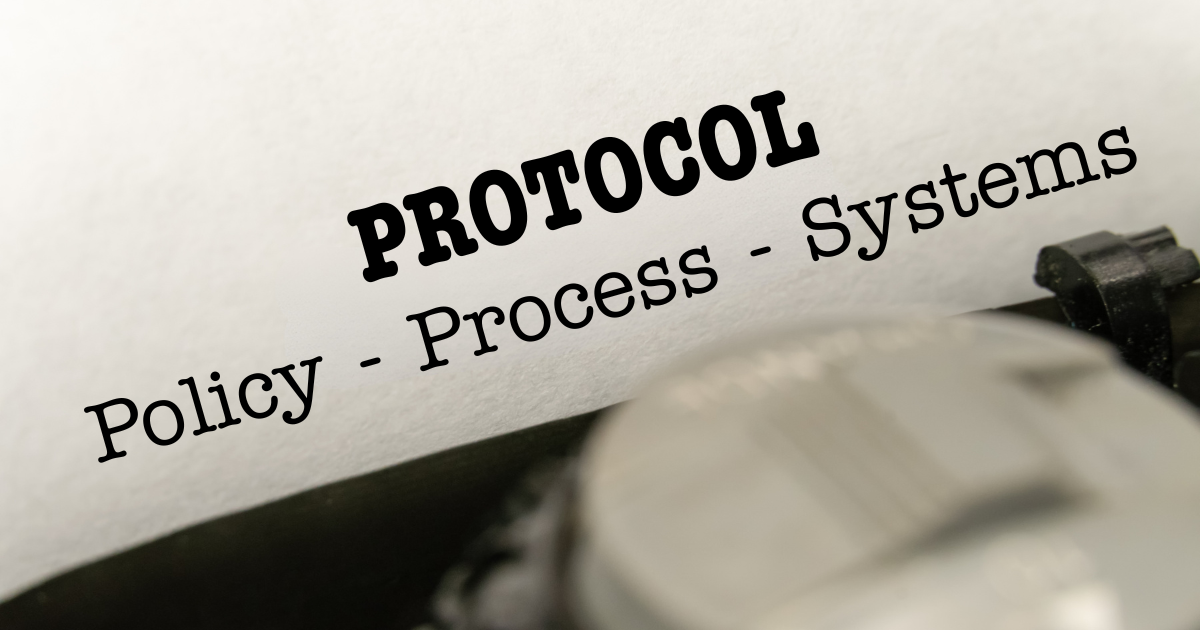
I’ve been thinking a lot about a phrase I’ve used for years:
Processes win wars.
Just about everyone I know agrees with that statement. Every top shop operator understands that strong, well-defined processes lay the foundation for a great work environment (a purposeful culture) and clients who like and trust you.
Yet I continue to wonder why so many automotive repair shops—legitimate businesses—have so few written processes in place.
Why is that?
Is it the word process itself?
Does it sound complicated, heavy, or overwhelming?
For many owners, the idea of creating processes for everything—from inbound client handling to quality control to workflow management to the other 98 moving parts required to run a smooth, well-oiled operation—feels like an impossible burden.
That got me thinking.
What if the problem isn’t the need for processes, but the word we use to describe them? And if you are a loyal listener to my podcast, you know I’m heavy into an industry-wide language shift to infuse our professionalism with greater purpose.
Introducing a Different Word: Protocol
Consider this shift in thinking.
Instead of asking, “What are our processes?”
Ask, “What are our protocols?”
What is our protocol for:
-
Promise times?
-
A waiting client?
-
A proper Vehicle Performance and Safety Inspection (DVI)?
-
An oil change?
-
A tire rotation?
-
Housekeeping responsibilities?
-
And the list goes on…
Does the word protocol change how seriously we take these activities?
Protocol isn’t just a government or diplomatic term. It is defined as:
A code of procedure or behavior for any group, organization, or situation.
It also refers to:
-
Formality
-
Standards
-
Rules
-
The defined method by which something is performed and verified
That definition should stop every shop owner in their tracks.
Protocol Demands Discipline
Protocols aren’t optional.
They aren’t “how Joe prefers to do it.”
They aren’t dependent on memory or experience.
Protocols create:
-
Consistency
-
Accountability
-
Predictable outcomes
-
A better client experience
-
A stronger culture
Most importantly, protocols remove guesswork and replace it with confidence—for your team and your customers.
Change the Word, Change the Mindset
If you’ve taken a backseat approach to documenting how your business truly operates—if you’re relying on tribal knowledge instead of written standards—try this simple mental shift.
Stop thinking process. Start thinking protocol.
Because when you think in terms of protocol, you stop asking if something should be documented—and start asking why it isn’t already.
And that’s how you keep winning the war of quality, consistency, and trust.
Protocols insist on processes to get things done. Processes explain how. Protocols define the standard. Professionals don’t wing it. They follow protocol.
The Protocol Test
For every critical task in your shop, ask:
-
Is it written?
-
Is it trained?
-
Is it followed?
-
Is it verified?
-
Is it improved?