Who is checking the work that keeps you and your family safe on the road?
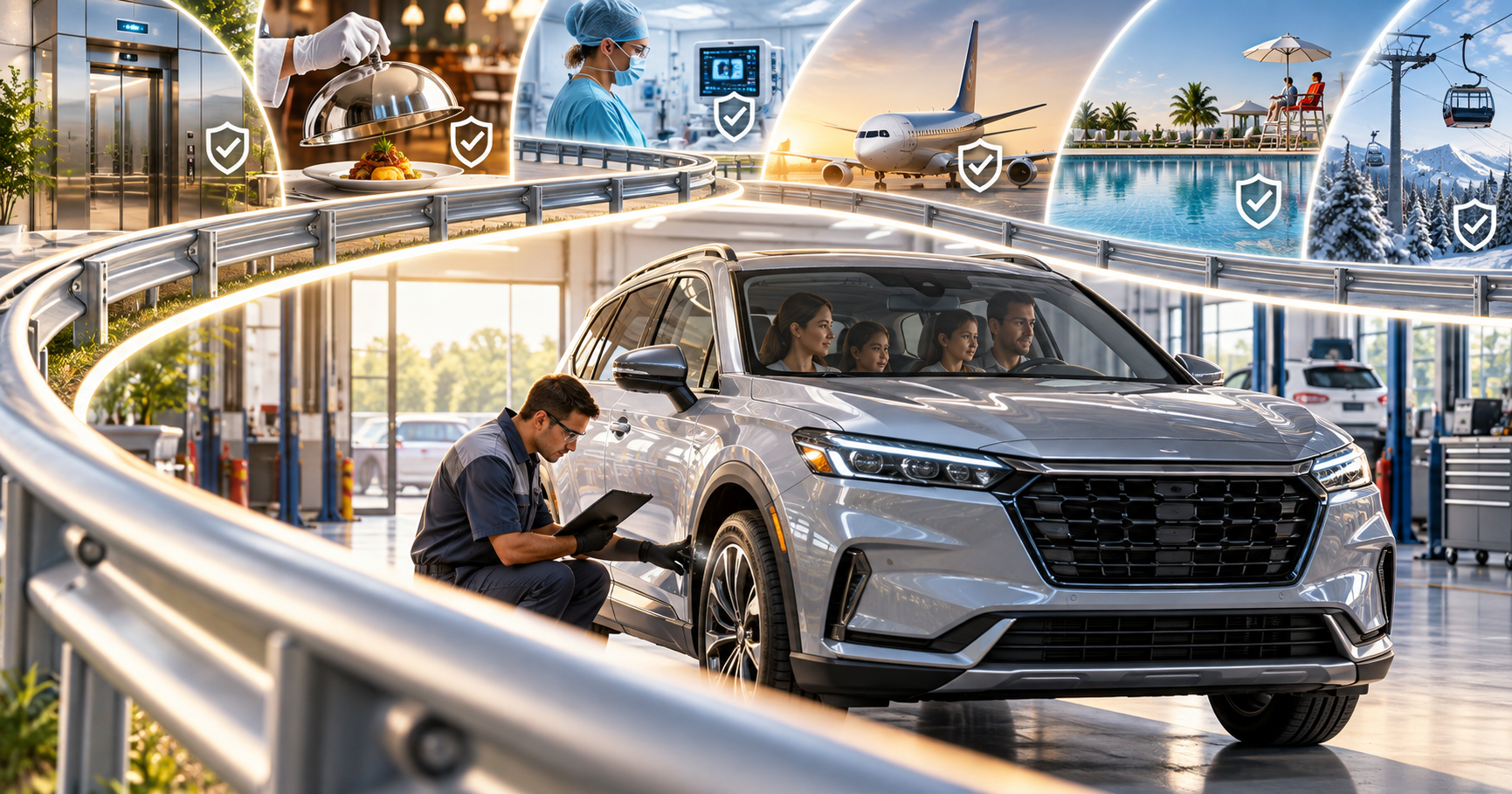
I’ve been thinking about guardrails lately. Not the ones along the highway, but the standards, inspections, and accountability measures that protect us from mistakes, oversights, and potentially dangerous outcomes.
Think about it.
Elevators are inspected. Restaurants are inspected, and many display their health inspection ratings for everyone to see. Food production, pharmaceuticals, medical devices, and aviation operate under layers of regulations, quality controls, and safety standards.
We inspect ski lifts, swimming pools, and even the lifts we use in our auto repair shops.
And for good reason. Human safety is involved.
Now consider the professional auto repair industry. What are our guardrails?
Only a relatively small number of states require periodic vehicle safety inspections. Other states have emissions testing requirements, and some have neither.
Do we require every person repairing a vehicle to demonstrate their competency through ASE certification? No. ASE certification is largely voluntary, although certain states have their own requirements.
Is there a universally mandated independent inspection after every brake repair? No.
What about Advanced Driver Assistance Systems (ADAS)? When repairs affect cameras, sensors, steering, suspension, or other related components, are we consistently verifying manufacturer requirements for system inspections and calibrations before returning the vehicle?
We know the answers. And that’s what concerns me.
As vehicles continue their headlong surge into sophisticated electronics, software, connected systems, and increasingly complex safety technologies, the knowledge required to diagnose and repair them professionally has never been greater.
Yet the opportunity to attempt a repair is far more accessible than the competency required to perform it correctly.
Anyone can watch a how-to video. Anyone can purchase tools. Anyone can claim to know how to repair a vehicle.
Meanwhile, social media is overflowing with advice about who’s ripping off whom, why a repair costs too much, and how easily someone could have done the work themselves.
But where is the conversation about competency, verification, and accountability?
A vehicle isn’t simply a machine. It’s a transportation system entrusted with human lives.
Every day, our clients put their children in the back seat. They drive to work, visit family, take vacations, and travel thousands of miles trusting that their vehicle will perform safely.
And we are the professionals they rely upon. That responsibility should mean something.
I’m not suggesting we need another government agency looking over our shoulders. Nor am I suggesting that every repair requires an exhaustive inspection of every vehicle system.
I’m suggesting that we take a serious look at the guardrails we establish within our own businesses.
Our vehicle inspections should provide clients with meaningful information about safety, reliability, and long-term vehicle health. Not simply a list of opportunities to sell additional services.
Our repair procedures should follow manufacturer requirements, be performed by qualified specialists, and include appropriate verification of the completed work.
And our final vehicle delivery process should be more than removing protective covers, parking the vehicle, and handing back the keys.
Did we verify the repair? Did we confirm that safety-related systems affected by our work function as required? Did we document the results? Did someone take responsibility for the final quality check?
That last question may be the most important.
I’m a strong believer in processes, protocols, checklists, and continuous education. But they only become guardrails when we consistently follow them.
A checklist that nobody completes is merely a piece of paper. A procedure that nobody verifies is simply an assumption. And an assumption involving vehicle safety can carry serious consequences.
Maybe it’s time we begin thinking of the final vehicle inspection as one of the most important steps in our professional responsibility.
Not because a regulation requires it. Not because it creates another revenue opportunity. But because our clients deserve to know that we take their safety as seriously as they do.
We’ve spent years elevating our industry’s professionalism, technical expertise, and commitment to education.
Perhaps the next step is to elevate our commitment to documented, verified repair quality.
After all, guardrails aren’t designed for the times when everything goes right. They’re designed to protect us when something goes wrong.
Here’s my challenge: If your state, your customer, or your insurance company never required you to verify the safety of your completed repairs, would your shop still do it every single time?
And if the answer isn’t an unequivocal yes, perhaps we’ve discovered where our next guardrail belongs.