
Hiring Our Future: Are We Attractive and Professional Enough?
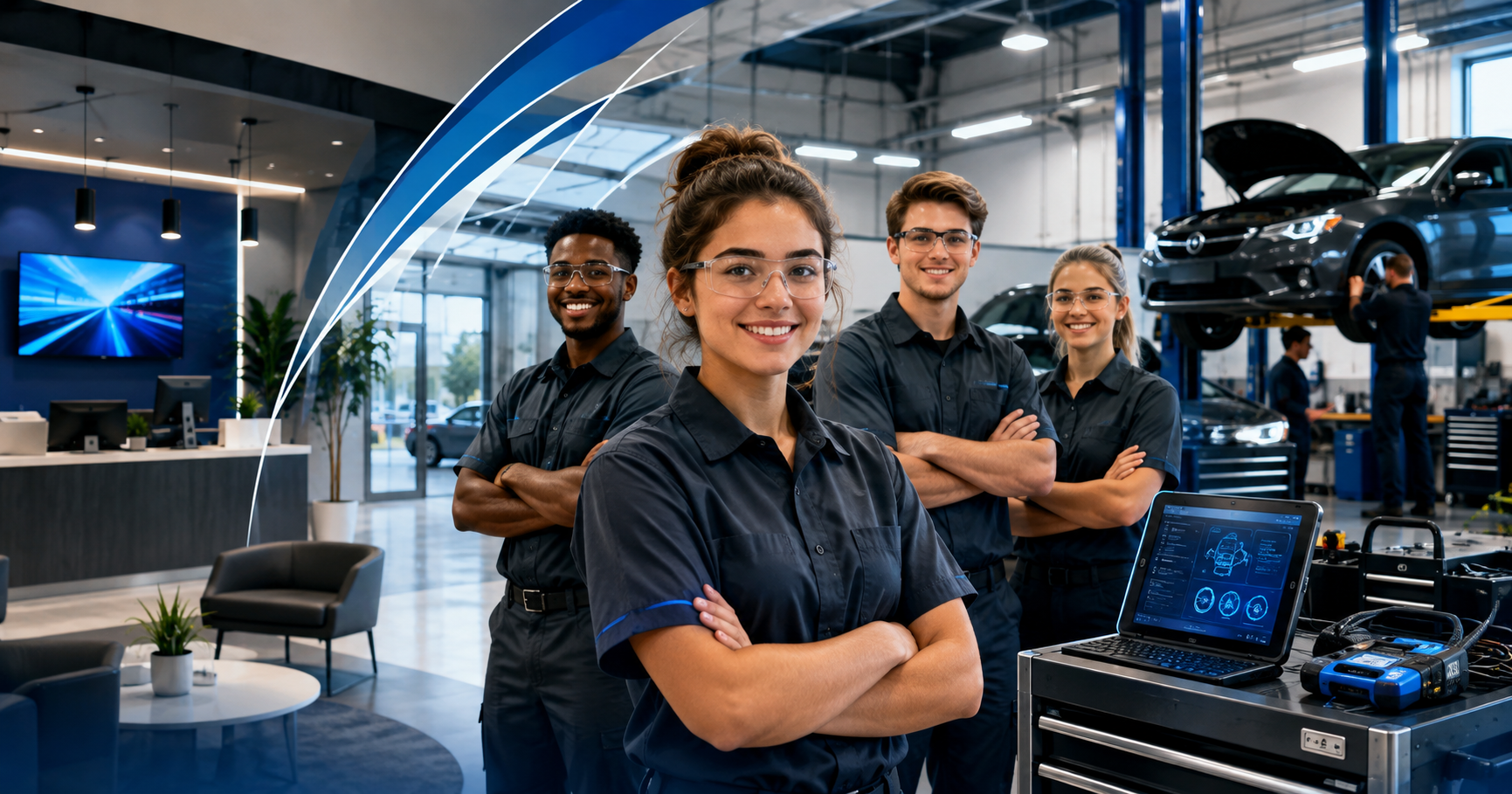
Every one of us who is invested in the ongoing success of our beloved industry understands the challenge. We need more people.
We need talented people to join our businesses, grow our companies, serve our customers, and keep the vehicles that millions of people depend on safe and reliable.
We have been talking about the technician shortage for years. We hear the numbers. We hear the projections. We hear the warnings from associations, foundations, educators, manufacturers, and industry leaders.
The shortage is real. But I think there is another question we need to ask ourselves.
Are we attractive and professional enough to recruit the people we need?
That question may make some of us uncomfortable. It should.
The Competition for Talent Is Bigger Than Automotive
The OE side of the industry has been calling for automotive specialists. Associations and foundations continue to remind us of the six-figure shortage of new talent.
At the same time, there is a significant push across the country to introduce young people to skilled careers.
Community colleges are promoting skilled trades. Stand-alone automotive education centers are training future professionals. Recruiters are working with students and parents. Dealers are actively building relationships with schools and future technicians.
And independent repairers have made progress, too. We have apprentice programs. We have mentoring programs. We have shop owners investing in training and developing people from within.
The NAPA apprentice program is one example of a widespread effort to create pathways into our industry. So there is activity. There is education. There is recruitment. But there is still a gap.
Are we presenting automotive repair as the professional, high-tech career that it actually is?
Because when the conversation turns to skilled careers, I don’t often hear automotive repair mentioned first. I hear welding. Carpentry. Electrical. HVAC. Plumbing. These are all important and valuable careers. But where is automotive?
Where is the conversation about becoming a highly trained automotive service specialist who works with sophisticated diagnostic equipment, advanced electronics, ADAS systems, electric vehicles, software, data, and constantly evolving technology?
Where is that story being told to the young person sitting at home trying to figure out what they want to do with their life? More importantly, what does our industry look like when they come looking?
Image Matters
Imagine a young person who has decided that a traditional four-year college isn’t the right path for them. Maybe they don’t want a $100,000 college loan. Maybe they want to learn a skill, start earning money, and build a career. Maybe they are fascinated by technology and enjoy solving problems.
Their parents are probably going to help them explore their options. Now imagine that young person searching for automotive repair businesses in their community. What do they see?
Look around your business. Really look. Look at your building. Look at the entrance. Look at the parking lot. Look at your lobby. Look at your colors. Look at your signage. Look at your team. Look at the way your people dress. Look at the cleanliness of your facility.
Look at your website. Look at your social media. Look at your customer communications. And yes, even think about the smells when someone walks through the door.
Then ask yourself: Does this look like a professional career destination? Or does it reinforce an old stereotype? Greasy. Dirty. Noisy. Low-tech. Dead-end. “Mechanic.”
Those perceptions are difficult to overcome when our physical environment and our marketing accidentally reinforce them.
We can tell someone that an automotive specialist can make a very good living. We can tell them there is tremendous opportunity. We can tell them this is a high-tech career. We can tell them there is a future. But if the image doesn’t support the message, which one do they believe?
People believe what they see. We Have a Story to Tell
The irony is that automotive repair may be one of the most technologically sophisticated skilled careers available today. Today’s automotive specialist isn’t simply turning wrenches. They are diagnosing complex electrical systems. They are working with networks and modules. They are using scan tools and diagnostic software.
They are understanding vehicle data. They are dealing with ADAS. They are working on hybrid and electric vehicle technology. They are continually learning. They are problem solvers. They are professionals responsible for the safety and reliability of the vehicles their customers depend upon every day.
That is a remarkable career story. But we have to tell it. And before we tell it, we need to make sure our businesses look like the story we are telling.
So What Do We Do?
We need to stop simply complaining about the shortage and start closing the perception gap. Here are a few places to start.
1. Get Professional
Walk through your business as if you were a prospective employee. What do you see?
Does your building look cared for? Does your lobby communicate professionalism? Are your employees appropriately dressed? Is the shop clean and organized? Are the bathrooms clean?
What does the customer experience feel like? What does it smell like? You don’t need a million-dollar facility. You need a facility that communicates pride.
2. Build Pride in Your Team
Your people are your best recruiting tool. A young person considering automotive repair needs to see people who are proud of what they do.
They need to hear professionals talk about their careers with enthusiasm. They need to see a team that respects one another. They need to see an opportunity. They need to see people who are learning, growing, earning, and building something.
Your culture is part of your recruiting strategy.
3. Upgrade Your Digital Front Door
Your website may be the first place a prospective employee encounters your business. Don’t make your website only about selling repairs.
Show people who you are. Show your team. Show your facility. Show your equipment. Show your training. Show your technology. Show your culture. Show your people learning. Show what it means to be part of your organization.
Your website should make someone think: “I could see myself working there.”
4. Change the Language
Words matter. If we continue to describe the profession using outdated language, we shouldn’t be surprised when people have outdated perceptions.
We aren’t installers. We aren’t simply parts replacers. We are professional automotive service specialists. We diagnose. We analyze. We solve problems. We maintain. We protect. We keep people moving safely.
The language we use helps shape the perception of the profession. Get my language shift document HERE.
5. Invite Young People In
Don’t wait for them to discover us. Go where they are. Build relationships with high schools, community colleges, career centers, technical programs, and educators.
Invite students into your facility. Let them see the technology. Let them talk to your specialists. Let them see what a modern repair facility looks like. Give them something real to compare with the stereotypes they may have heard.
6. Make Parents Part of the Conversation
This one is important. Young people aren’t always making these decisions alone. Parents have an enormous influence. We need to help parents understand that automotive repair is not the career it was 30 or 40 years ago. It is a technology-driven profession.
It requires education. It requires problem-solving skills. It requires continuous learning. And it can provide a very rewarding career. We need parents to see the opportunity before they dismiss it. Get a poster, HERE, for your counter that says ‘Automotive Careers Happen Here’.
We Have to Look Like the Future
There is no shortage of opportunity in automotive repair. There is a shortage of people.
But I believe there is also a shortage of perception. We have not always done a good enough job showing the world what this industry has become. If we want young people to see automotive repair as a career, we have to give them a reason to see it that way.
That starts with us. Look around your business. Look at your people. Look at your website. Look at your marketing. Look at your facility. Look at the language you use.
Then ask the uncomfortable question: Would I recommend this as a career to my own child? If the answer is yes, that’s great.
Now ask a second question: Does everything about my business communicate why? We cannot complain about the perception of our industry while contributing to it.
We cannot tell young people that automotive repair is a high-tech profession while presenting an image that looks like it belongs in another era. We cannot say we want to attract professionals while failing to look, act, and communicate like professionals.
The future of our industry isn’t going to walk through the door by accident. We have to go get it. We have to make this career visible. We have to make it attractive. We have to make it professional.
And we have to make people proud to say: “I’m an automotive service specialist.” This isn’t just about hiring our future. It’s about creating a future worth joining.
Get started.

About the author, Carm Capriotto, AAP
Carm is the founder and host of the Remarkable Results Radio Podcast and the pioneer of automotive aftermarket podcasts. Carm calls on his years of experience in the aftermarket to bring engaging stories from his guests.
Listen to raw, unfiltered, honest, and sincere stories that include insights, trends, best practices, and expertise. Each interview brings an opportunity to learn one new thing through the stories of personal achievement. Many podcast guests tell their story of transformation from working in their business to working on it.
As host of over 1,000 episodes, Carm uses his enthusiasm and passion for the aftermarket especially the service sector to take his listeners on a journey showcasing successful service professionals’ paths to Remarkable Results. He also enjoys interviews with aftermarket industry thought leaders who bring their industry perspectives to his listener.
Follow the podcast on your favorite podcast listening app and always listen to learn just one thing!